The Brand Account
Why are some companies more successful than their competitors even though their products are technically hardly any better?
They invest in their brand.

Why are some companies more successful than their competitors even though their products are technically hardly any better?
They invest in their brand.
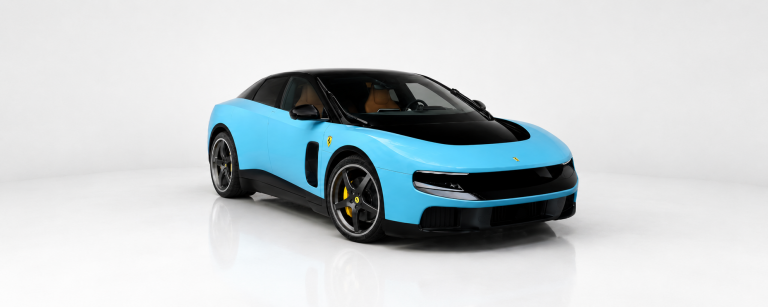
Is the Ferrari Luce a break with the Ferrari myth — or an attempt to carry that myth forward under new technical and social conditions? The quick judgements fall short. Good design does not merely confirm expectations. It also tests whether those expectations still hold.
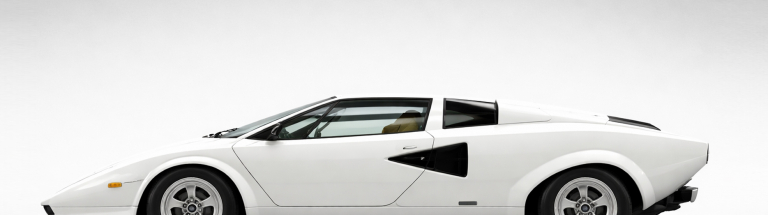
The sports car is an easy thing to criticise. Too expensive, too cramped, too impractical, hardly usable to its full potential in everyday life — and all too often read as a rolling pose.
And yet it would be too simple to dismiss it merely as a status symbol. Few other products show so clearly that things are not only used, but also read in very different ways — and that even the irrational can have its justification.

Good products do not happen by chance. They are the result of creativity within the development process.
In practice, this often becomes apparent at a certain point: a product is well advanced – and yet progress stalls. It works, but there is a lack of clarity, direction, or a clear next step.

“There's no arguing about taste,” people say. And often mean: anything goes. Everything is equally valid. It’s all a matter of personal preference.
In private life, that may be true. In social and professional contexts, however, taste is neither arbitrary nor objective. It arises from cultural conventions – and has to be continually understood and reinterpreted.

Many companies are rightly proud of their technical developments. Internally, it is clear where the benefits lie – the arguments and the figures add up.

Do you really need an elaborately designed logo – or is it just costly vanity?
Is design sometimes unnecessary? The short answer: yes, sometimes it’s better to leave it out.
Communication takes place on many levels. A value proposition can be stated – but will it be believed? And how can you ensure that someone truly engages with a product?
‘Beautiful’ is not a term that designers work with in isolation. Beauty is relative and needs context. And anyway: a tool must be effective and efficient - not beautiful. A superfluous add-on?

Our technical world is becoming increasingly complex - but people are not. Can we get to grips with this?

The topic of ‘artificial intelligence’ is currently preoccupying many people. Some fear the destruction of their developer and designer existence, others are singing hallelujah. Some are completely ignoring the topic. So what does AI mean for product development?
All hell is breaking loose in the car world! Car design is out of control. We are in a kind of car rococo. How did it come to this?